Arsip:

Academic

Arabic Study Program UGM Students Learn Digital Promotion Strategies in the Ninth Entrepreneurship Class
Arabic Study Program UGM Students Learn Digital Promotion Strategies in the Ninth Entrepreneurship Class

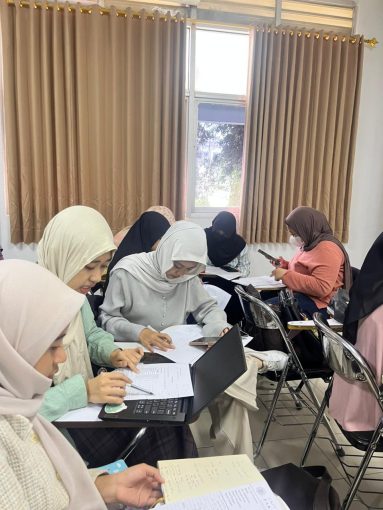
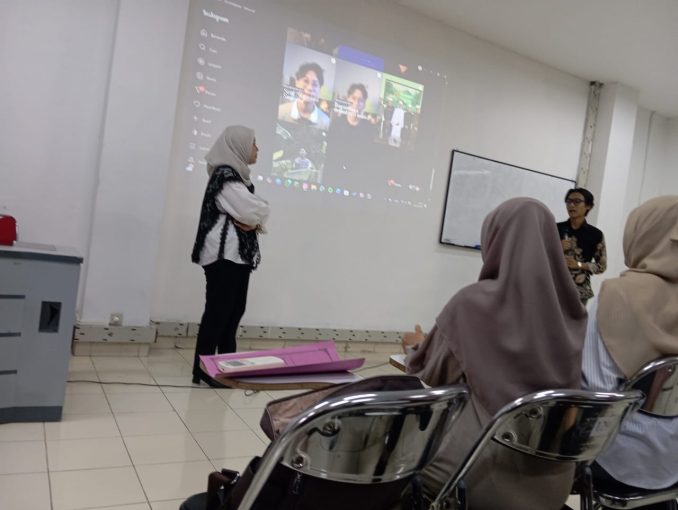
Yogyakarta, October 27, 2025 – The Arabic Study Program, Faculty of Cultural Sciences, Universitas Gadjah Mada, continued its Entrepreneurship course series with the ninth session, featuring an inspiring guest speaker, Reisa Nurma Boruregar, S.S., a young entrepreneur, digital marketing practitioner, and proud alumni of the study program. In this session, Reisa delivered a lecture titled “Developing Entrepreneurship through Digital Promotion,” which focused on strategies for marketing, branding, and leveraging digital media to build sustainable businesses.

Reisa began the lecture by sharing her personal journey of starting a business from scratch, from selling products through BlackBerry Messenger to managing multiple ventures such as ReisaGarage, Jogja Nasi Bento, and Layana Indonesia. She emphasized the importance of adaptability to changes in social media algorithms and digital trends. According to her, one of the most common mistakes entrepreneurs make is their reluctance to evolve with technology and digital advertising trends, even though these are crucial to maintaining business relevance in today’s market.

Students were guided to understand how to choose the right sales platforms, identify target markets, and find products and suppliers aligned with consumer demand. Reisa also introduced various digital tools that can be used for market research, identifying trending products, and analyzing high-performing content on platforms such as TikTok and Shopee.

The session also explored effective digital marketing strategies, both paid and unpaid. Reisa explained that paid promotions could include collaborative content (collab posts), endorsements, affiliate marketing systems, and paid digital advertisements. Meanwhile, unpaid promotions could be optimized through organic content that is relatable, entertaining, inspiring, informative, visually engaging, and encourages audience interaction.

In addition to promotional strategies, Reisa also discussed the importance of setting realistic pricing structures based on production, operational, tax, commission, and profit margin considerations. Students were encouraged to think strategically about pricing and sales targets to achieve sustainable business growth.

Through this session, Arabic Study Program students not only learned about digital marketing techniques but also discovered how creativity and digital literacy can be transformed into tangible economic strength.

This course actively supports the achievement of the Sustainable Development Goals (SDGs), particularly SDG 4 (Quality Education) by providing practical entrepreneurial education, SDG 8 (Decent Work and Economic Growth) by fostering tech-savvy young entrepreneurs, and SDG 9 (Industry, Innovation, and Infrastructure) through the application of digital innovation in developing competitive and sustainable business models.


Author: Muhammad Ardiansyah


#SASTRAARAB

#SASTRAARABUGM

#FIBUGM

#SDGs4:QualityEducation

#SDGs8:DecentWorkandEconomicGrowth

#SDGs9:Industry,Innovation,andInfrastructure

The Eighth Session of Entrepreneurship Class: Arabic Study Program Students at UGM Learn Sustainable Business Funding Strategies

The Eighth Session of Entrepreneurship Class: Arabic Study Program Students at UGM Learn Sustainable Business Funding Strategies

Yogyakarta, October 20, 2025 – The Arabic Study Program, Faculty of Cultural Sciences, Universitas Gadjah Mada, continued its eighth session of the Entrepreneurship course with lecturer Diyah Wikan Rakhmatika, S.S., M.A.. This session carried the theme “Business Funding Opportunities”, focusing on strategies to acquire, manage, and utilize financial resources effectively and ethically to support business sustainability.

In her presentation, Diyah explained that funding is a fundamental aspect of business continuity and growth. She emphasized that a successful entrepreneur is not only one who can generate creative ideas but also one who can manage finances wisely and determine the right funding strategy. Students were introduced to two main sources of business capital — internal funding (personal savings, reinvested profits, and support from family or friends) and external funding (banks, investors, venture capital, crowdfunding, Islamic financing, and government grants).

Furthermore, Diyah highlighted the importance of preparing a compelling and credible business proposal as a key to attracting investors. A well-crafted proposal, she noted, should clearly present the business vision, market potential, financial projections, and realistic return plans. She also underscored the principles of transparency, accountability, and Islamic ethics in financial management to ensure that businesses operate honestly, fairly, and sustainably.

The session also explored real-world funding practices in Indonesia, such as the government’s Kredit Usaha Rakyat (KUR) program, venture capital schemes from institutions like East Ventures and Mandiri Capital Indonesia, as well as donation- and investment-based crowdfunding models. Through case studies, students were encouraged to identify opportunities and challenges in funding initiatives relevant to literature- and language-based entrepreneurship, including independent publishing, digital literacy content creation, and language learning platforms.

This session provided valuable insights for Arabic Study Program students to develop businesses that are not only intellectually creative but also financially robust. By understanding sustainable business funding strategies, students are expected to design independent, ethical, and impact-driven entrepreneurial models.

The course also supports the achievement of the Sustainable Development Goals (SDGs) — particularly SDG 4 (Quality Education) through practical entrepreneurship education, SDG 8 (Decent Work and Economic Growth) by fostering competitive young entrepreneurs, and SDG 9 (Industry, Innovation, and Infrastructure) by promoting innovation and sustainable resource management.


Author: Muhammad Ardiansyah


#SASTRAARAB

#SASTRAARABUGM

#FIBUGM

#SDGs4:QualityEducation

#SDGs8:DecentWorkandEconomicGrowth

#SDGs9:Industry,Innovation,andInfrastructure
The Seventh Entrepreneurship Class: Arabic Study Program Students Learn Financial Management in Business

The Seventh Entrepreneurship Class: Arabic Study Program Students Learn Financial Management in Business

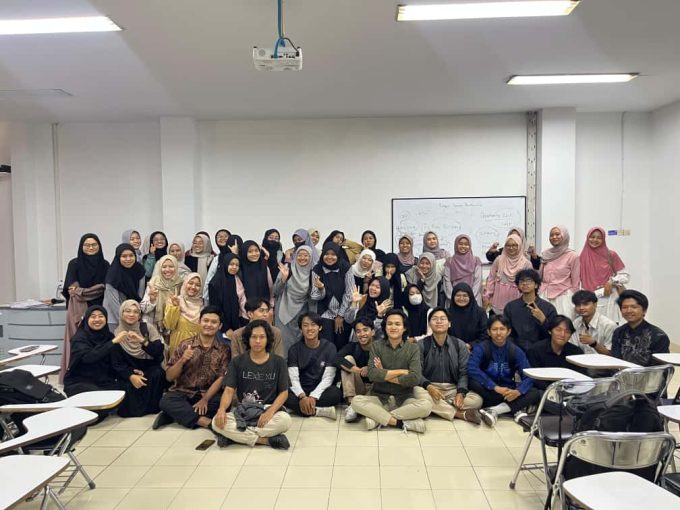
Yogyakarta, October 13, 2025 – The Arabic Study Program, Faculty of Cultural Sciences, Universitas Gadjah Mada, continued its Entrepreneurship course series with the seventh session featuring a new speaker, Diyah Wikan Rakhmatika, S.S., M.A.—an academic and business practitioner with extensive experience in Islamic economics and financial management. In this session, Arabic Study Program students explored the crucial topic of Financial Management in Entrepreneurship.

During the lecture, Diyah emphasized that financial management is the backbone of business sustainability, where maintaining a balance between income and expenditure must be grounded in transparency and accountability. She highlighted that many entrepreneurs, especially in the UMKM sector, struggle to grow because they mix personal and business finances. Therefore, students were encouraged to understand the importance of financial separation, regular transaction recording, proper budgeting, and periodic financial evaluations to assess business performance effectively.

The lecture also covered three essential financial reports that every aspiring entrepreneur should master: the income statement, cash flow statement, and simple balance sheet. These reports serve as critical tools for measuring profitability, maintaining positive cash flow, and understanding the overall financial health of a business. Diyah further introduced the concepts of cash flow management and reinvestment strategy as strategic approaches to maintaining financial stability and supporting long-term business growth.

Beyond the technical aspects, Diyah also discussed the ethical and social responsibilities of financial management. She linked sound financial practices with the principles of sustainability, emphasizing that business profits should not solely benefit the owner but also contribute to the well-being of employees, communities, and the environment—such as through corporate social responsibility (CSR) initiatives.

Through this seventh session, students of the Arabic Study Program at UGM were expected not only to understand financial management theory but also to apply it in their ongoing business plan projects. With strong financial literacy, students can build ventures that are not only profitable but also ethical and sustainable.

This entrepreneurship class also aligns with the United Nations’ Sustainable Development Goals (SDGs), particularly SDG 4 (Quality Education) by providing practical entrepreneurship education, SDG 8 (Decent Work and Economic Growth) by fostering competent young entrepreneurs, and SDG 12 (Responsible Consumption and Production) by instilling values of efficient and ethical resource management.


Author: Muhammad Ardiansyah


#SASTRAARAB

#SASTRAARABUGM

#FIBUGM

#SDGs4:QualityEducation

#SDGs8:DecentWorkandEconomicGrowth

#SDGs12:ResponsibleConsumptionandProduction

Sixth Entrepreneurship Lecture: UGM Arabic Study Program Students Design Social Entrepreneurship Business Plans Based on Literacy

Sixth Entrepreneurship Lecture: UGM Arabic Study Program Students Design Social Entrepreneurship Business Plans Based on Literacy

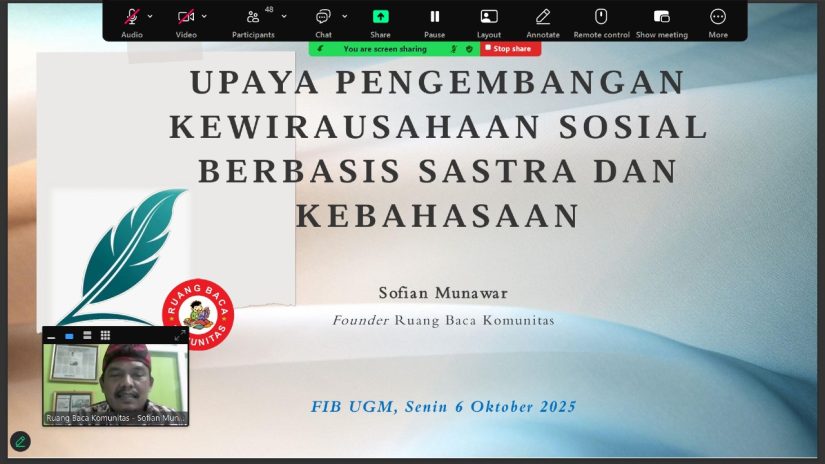
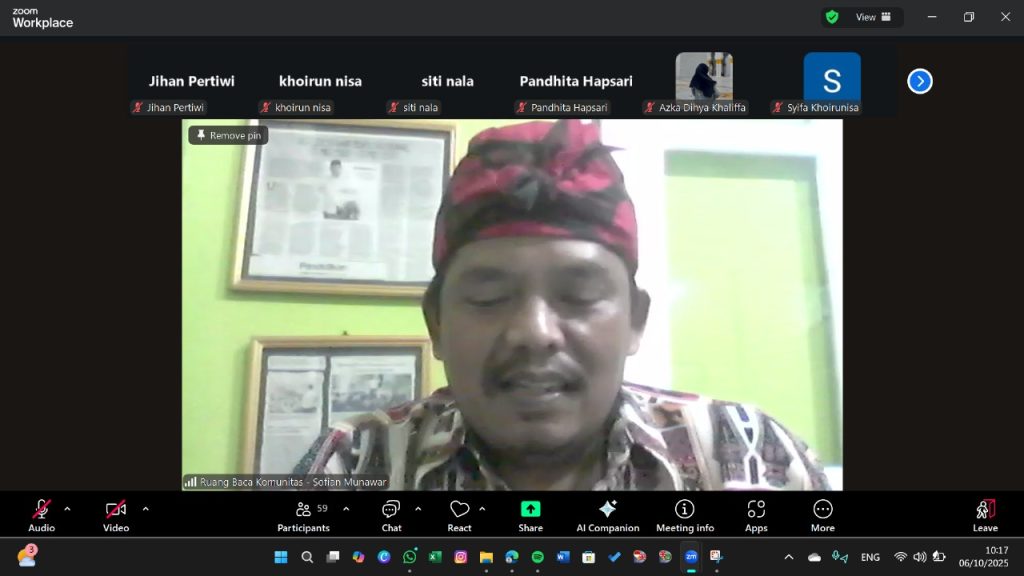
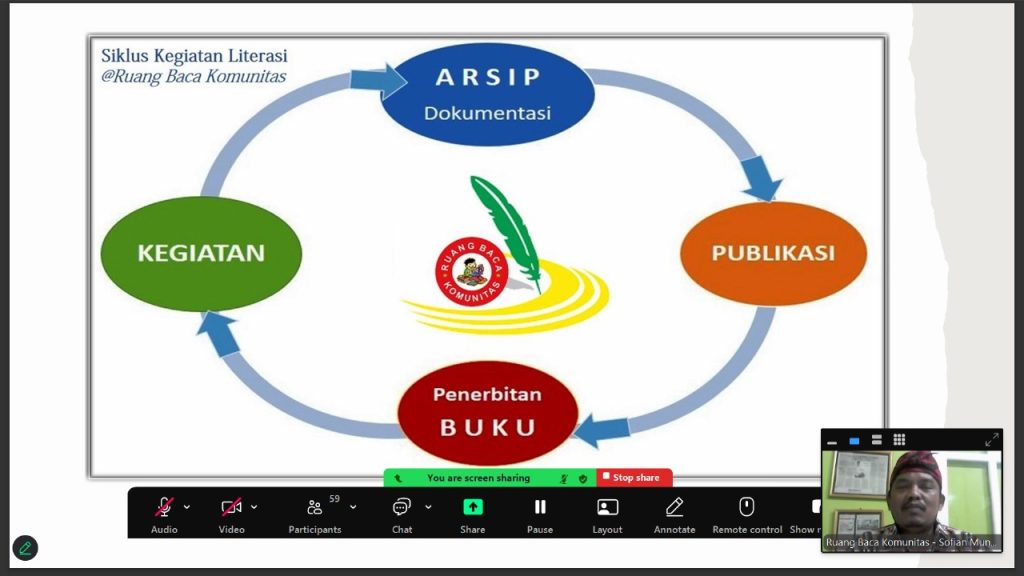
Yogyakarta, October 6, 2025 – The Arabic Study Program, Faculty of Cultural Sciences, Universitas Gadjah Mada, continued its Entrepreneurship course in the sixth session by once again inviting Sofian Munawar, S.S., M.A., Founder of Ruang Baca Komunitas, as the guest lecturer. In this session, students were guided to design a business plan under the theme “Developing Social Entrepreneurship Based on Literature and Language”, as a practical application of the materials discussed in previous meetings.

During the lecture, Sofian Munawar emphasized the importance of understanding the literacy ecosystem within schools and communities as the foundation for developing literature- and language-based social enterprises. Students were encouraged to identify existing literacy issues—such as low reading interest, limited access to books, and weak writing culture among students. From these challenges, they learned how to conduct research, develop innovative concepts, and formulate sustainable business plans that take social and educational aspects into account.

Sofian Munawar also highlighted the significance of building cross-institutional networks involving schools, government bodies, and literacy communities. He introduced students to various literacy-based initiatives such as IKMASA Goes to School (a literacy outreach to Islamic boarding schools), collaborations with the Ministry of Religious Affairs and BAZNAS, and publishing opportunities through IKMASA Press. In this context, books are seen not merely as reading materials, but as tools of inspiration and instruments for community empowerment.

As a form of applied learning, Arabic Study Program students were assigned to create a group business plan titled “Social Entrepreneurship Design Based on Linguistic Literacy”, which included components such as background, problem identification, business opportunities, and implementation strategies. These business plans will later be presented in the following session as a tangible reflection of their ability to develop literacy-based social enterprise ideas.

Through this session, UGM Arabic Study Program students not only learned to be critical and creative academics but also changemakers capable of generating social impact through literacy innovation. This program also contributes to the achievement of the Sustainable Development Goals (SDGs), particularly SDG 4 (Quality Education) by strengthening literacy movements, SDG 8 (Decent Work and Economic Growth) by encouraging the creation of competitive social enterprises, and SDG 10 (Reduced Inequalities) through inclusive education and language-based community empowerment.


Author: Muhammad Ardiansyah


#SASTRAARAB

#SASTRAARABUGM

#FIBUGM

#SDGs4:QualityEducation

#SDGs8:DecentWorkandEconomicGrowth

#SDGs10:ReducedInequalities