Post by :

masarif_abe

UGM’s Arabic Study Program Holds Second Entrepreneurship Lecture: Focusing on Business Opportunity Identification and Noble Purpose

UGM’s Arabic Study Program Holds Second Entrepreneurship Lecture: Focusing on Business Opportunity Identification and Noble Purpose

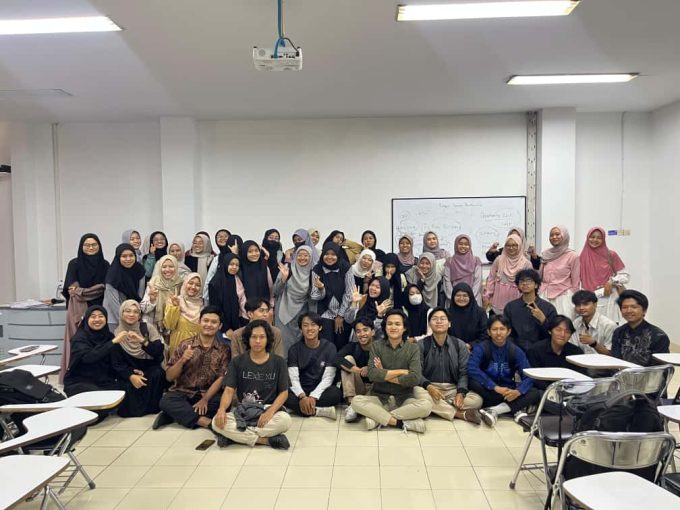
Yogyakarta, September 8, 2025The Arabic Study Program, Faculty of Cultural Sciences, Universitas Gadjah Mada continued its second Entrepreneurship lecture led by Dr. Ir. Siti Andarwati, S.Pt., MP., IPU., ASEAN Eng.. This session introduced students to the Student Entrepreneur Development Program (P2MW) managed by the Ministry of Education, Culture, Research, and Technology, while also providing a comprehensive discussion on identifying business opportunities and understanding the criteria for business success.

During the lecture, students were introduced to a wide range of potential business sectors, including food and beverage, creative industries, arts and culture, services, tourism, as well as manufacturing and technology. Dr. Siti explained that through the P2MW program, students are not only trained to write business proposals but also engaged in the entire process—from socialization and internal campus selection, to monitoring, evaluation, and participation in the KMI Expo, a national showcase for student entrepreneurship.

Beyond the technical aspects, Dr. Siti highlighted the importance of embedding a Noble Purpose in every business endeavor. She emphasized that a truly meaningful enterprise should not be driven solely by financial profit, but also contribute positively to society and the environment while ensuring long-term sustainability. She shared inspiring examples, such as ornamental chicken farming that empowers rural communities, the development of eco-friendly products, and startup-based cleaning services that involve underprivileged students.

The lecture also delved into critical elements of business evaluation, including how students can understand potential consumers through segmentation, targeting, and positioning; the need for product innovation and competitive advantage; effective marketing strategies; and the efficient management of both tangible and intangible resources. Equally vital, healthy financial management was underlined as a key factor in sustaining and growing a business in a competitive market.

This session provided students with valuable insight into how a simple idea can evolve into a competitive, innovative enterprise that brings real benefits to society. Dr. Siti expressed her hope that UGM Arabic Study Program students will embrace entrepreneurship not merely as a career option but as a concrete way to contribute to national development.

Through this course, the Arabic Study Program reaffirms its commitment to nurturing a new generation of graduates who are not only academically excellent but also innovative, competitive, and sustainability-driven.


Author: Muhammad Ardiansyah


#SDGs4:QualityEducation

#SDGs8:DecentWorkandEconomicGrowth

#SDGs9:Industry,Innovation,andInfrastructure

#SDGs12:ResponsibleConsumptionandProduction

UGM’s Arabic Study Program Holds Entrepreneurship Lecture to Nurture Innovative and Adaptive Students

UGM Arabic Study Program Holds Entrepreneurship Lecture to Nurture Innovative and Adaptive Students

Yogyakarta, September 01, 2025The Arabic Study Program, Faculty of Cultural Sciences, Universitas Gadjah Mada, has introduced an Entrepreneurship lecture led by Dr. Ir. Siti Andarwati, S.Pt., MP., IPU., ASEAN Eng. The lecture is designed to provide students with entrepreneurial insights focused on fostering innovative, impactful, and sustainable mindsets.

In its opening lecture, students were introduced to the scope of entrepreneurship, the urgency of cultivating young entrepreneurs in Indonesia, and their role in driving national economic growth. Referring to data from Statistics Indonesia (BPS), the lecture highlighted how the limited availability of formal jobs must be balanced with the creation of new business opportunities, particularly among the younger generation.

The class also emphasized the philosophical differences between entrepreneurship and wirausaha (sociopreneurship). While entrepreneurship is often rooted in Western individualistic philosophy, the Indonesian concept of wirausaha underscores harmony between individual and community, aiming for broader social benefits.

Students were further equipped with knowledge of entrepreneurial psychological profiles, including self-confidence, results orientation, risk-taking, and future-oriented thinking. The Plan-Do-Check-Action (PDCA) cycle was introduced as a key strategy for building consistent and sustainable business practices.

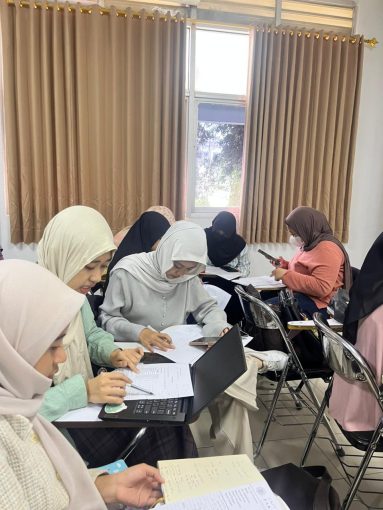
As part of the interactive session, students worked in small groups to develop and present business ideas, focusing on identifying market opportunities, crafting business plans, and showcasing product innovations. These activities were designed to sharpen their teamwork, problem-solving, and presentation skills while encouraging creative thinking.

Through this course, Arabic Study Program students are expected to cultivate creative and innovative mindsets while viewing entrepreneurship as a meaningful path to contribute to sustainable development. The program also supports the achievement of the Sustainable Development Goals (SDGs), particularly SDG 4 (Quality Education), SDG 8 (Decent Work and Economic Growth), and SDG 9 (Industry, Innovation, and Infrastructure).


Author: Muhammad Ardiansyah


#SDG4:QualityEducation

#SDG8:DecentWorkandEconomicGrowth

#SDG9:IndustryInnovationandInfrastructure

From Yogyakarta to Buru: Pocket Dictionary & Arabic Learning, UGM’s KKN Innovation in Maluku

From Yogyakarta to Buru: Pocket Dictionary & Arabic Learning, UGM’s KKN Innovation in Maluku

Buru Island, July 16, 2025 – Universitas Gadjah Mada (UGM) continues to carry out its Kuliah Kerja Nyata (KKN) program across 35 provinces in Indonesia. One of its inspiring initiatives came from Shang Narendra, affectionately known as Adam, a student of the Arabic Study Program, Faculty of Cultural Sciences, UGM. During his KKN service in Lamahang Village, Waplau District, Buru Regency, Maluku Province, Adam introduced two unique programs: the creation of a pocket Arabic dictionary and simple Arabic language lessons for students.

The pocket dictionary was carefully prepared in Yogyakarta and later distributed during the school orientation period (Matsama – Masa Ta’aruf Madrasah) at MTs Al-Khairaat in Lamahang. The classes targeted first-year students who had never been exposed to Arabic before, aiming to introduce them to basic vocabulary, everyday conversation, and inspire early motivation to learn a foreign language.

The pocket dictionary contains practical, thematic vocabulary across categories such as household, school, environment, body parts, and pronouns, making it easier for students to recall and use words in daily situations. Beyond serving as a learning resource, the dictionary was also given as a keepsake to MTs Al-Khairaat. Interestingly, its usefulness sparked interest from KKN students in other regions, who later helped distribute the dictionary more widely—turning it into one of UGM’s KKN innovations with a broader impact on Arabic language education.

In practice, Adam began lessons by introducing simple greetings and personal pronouns (isim dhamir) through interactive learning media such as colorful slides and posters. The students of MTs Al-Khairaat welcomed the sessions with great enthusiasm, showing remarkable eagerness to learn. Not only did they enjoy the introductory Arabic lessons, but they were also able to immediately practice the new words with their peers.

The program was considered highly successful in sparking student interest to explore Arabic further. The school even expressed hopes for more future visits from UGM’s KKN participants. As a touching farewell, the KKN team received parting gifts from the MTs students before their departure—a heartfelt gesture that reflected the strong bonds formed between the students, teachers, and the local community.

Author: Shang Narendra

#KKNUGM 

#KKNPPMUGM2025

#SastraArabUGM

#FIBUGM

#UGMBaktiUntukNegeri
#SDGS4QualityEducation

UGM Arabic Study Program Student Contributes to the Energy Sector: Faris Zakiy Ramadhan Completes Internship at PLN

UGM Arabic Study Program Student Contributes to the Energy Sector: Faris Zakiy Ramadhan Completes Internship at PLN

Yogyakarta, August 27, 2025Faris Zakiy Ramadhan, a 2023 student of the Arabic Study Program, Faculty of Cultural Sciences, Universitas Gadjah Mada, has successfully completed his field internship at PLN Indonesia Power UBP Kamojang PLTP Gunung Salak, Bogor, West Java. The one-month internship, held from July 1 to 31, 2025, placed Faris in the Corporate Social Responsibility (CSR) division. His interests in community engagement, program development, writing, graphic design, and video editing motivated him to choose CSR, a field that closely connects corporate responsibility with the surrounding community.

Throughout the internship, Faris gained a wealth of new experiences. During the first week, he joined an orientation on the operational system of the Geothermal Power Plant (PLTP), learning about electricity production, distribution, and workplace safety practices. In the second week, he focused on CSR activities, including a visit to Pulosari Village, one of the company’s fostered communities. The program involved visits to a layer chicken farm, a community health post (Posyandu), and a live-in experience with local families. A highlight was the Bio Digester initiative, which transforms livestock waste into alternative household energy in the form of gas, along with byproducts such as organic liquid and solid fertilizers. This program not only supports clean energy but also enhances the welfare of the village community.

Selama menjalani magang, Faris mendapatkan berbagai pengalaman baru. Pada minggu pertama, ia mengikuti pengenalan mengenai sistem kerja Pembangkit Listrik Tenaga Panas Bumi (PLTP), mulai dari proses produksi listrik hingga distribusinya kepada masyarakat, serta mempelajari aspek keselamatan kerja. Memasuki minggu kedua, ia mulai difokuskan pada bidang CSR dengan melakukan visitasi ke Desa Pulosari sebagai desa binaan perusahaan. Kegiatan ini mencakup kunjungan ke peternakan ayam petelur, posyandu, serta live in di rumah warga. Salah satu program unggulan yang menjadi perhatian adalah pengelolaan Bio Digester, yaitu pemanfaatan limbah organik kotoran ternak yang menghasilkan energi alternatif berupa gas untuk kebutuhan rumah tangga serta produk turunan berupa pupuk organik cair maupun padat. Program ini tidak hanya mendukung energi bersih, tetapi juga meningkatkan kesejahteraan masyarakat desa binaan.

In the third and fourth weeks, Faris contributed to extended CSR initiatives such as earthworm farming, designing educational leaflets for Posyandu, editing tutorial videos on mineral block production, and engaging with local residents and children in the fostered village. He described these activities as similar to UGM’s Kuliah Kerja Nyata (KKN) program, given their strong emphasis on community interaction.

As an Arabic Study Program student, Faris acknowledged the challenges of adapting to the energy industry’s highly technical environment. However, through collaboration and discussions with engineering students from various fields, he was able to broaden his interdisciplinary understanding and discover the relevance of humanities students in CSR development. This experience not only enriched his academic journey but also strengthened his conviction that students of literature can play a meaningful role in advancing sustainable development in energy, environment, and society.


Author: Faris Zakiy Ramadhan


#SastraArab
#FIBUGM
#Magang
#SDGS4:QualityEducation
#SDGS7:AffordableAndCleanEnergy
#SDGS8:DecentWorkAndEconomicGrowth
#SDGS17:PartnershipForTheGoals