Arsip:

Agendas

UGM Arabic Study Program Students Conduct Field Study in Kudus and Demak to Explore Arab–Islamic and Javanese Cultural Acculturation

UGM Arabic Study Program Students Conduct Field Study in Kudus and Demak to Explore Arab–Islamic and Javanese Cultural Acculturation

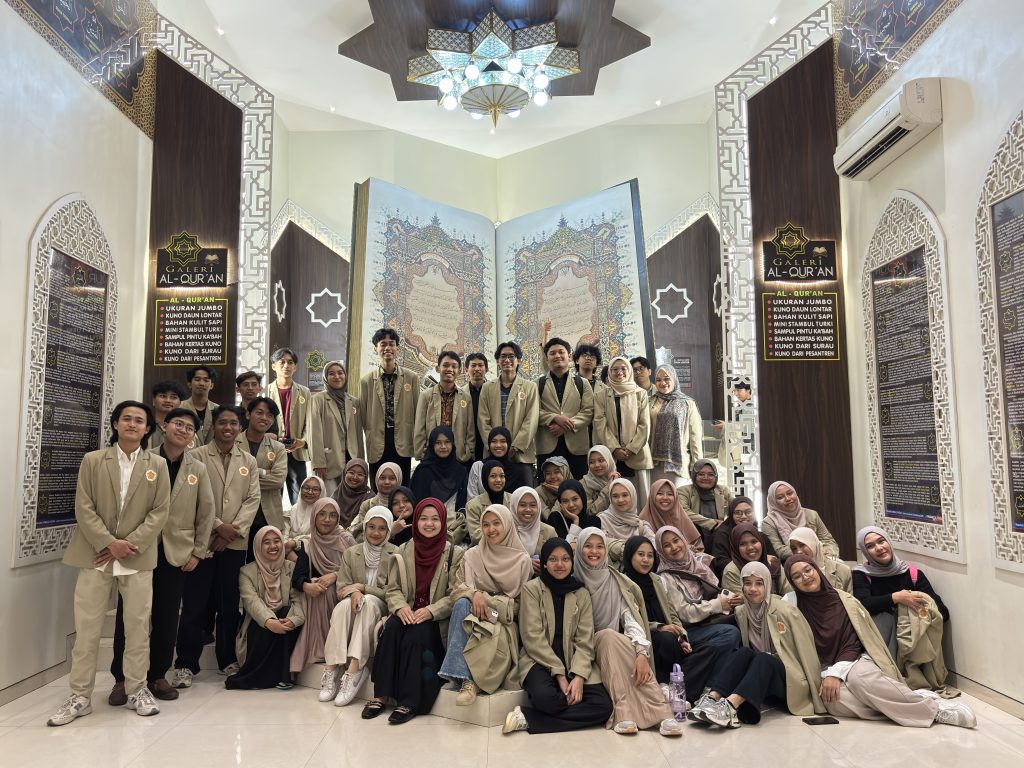
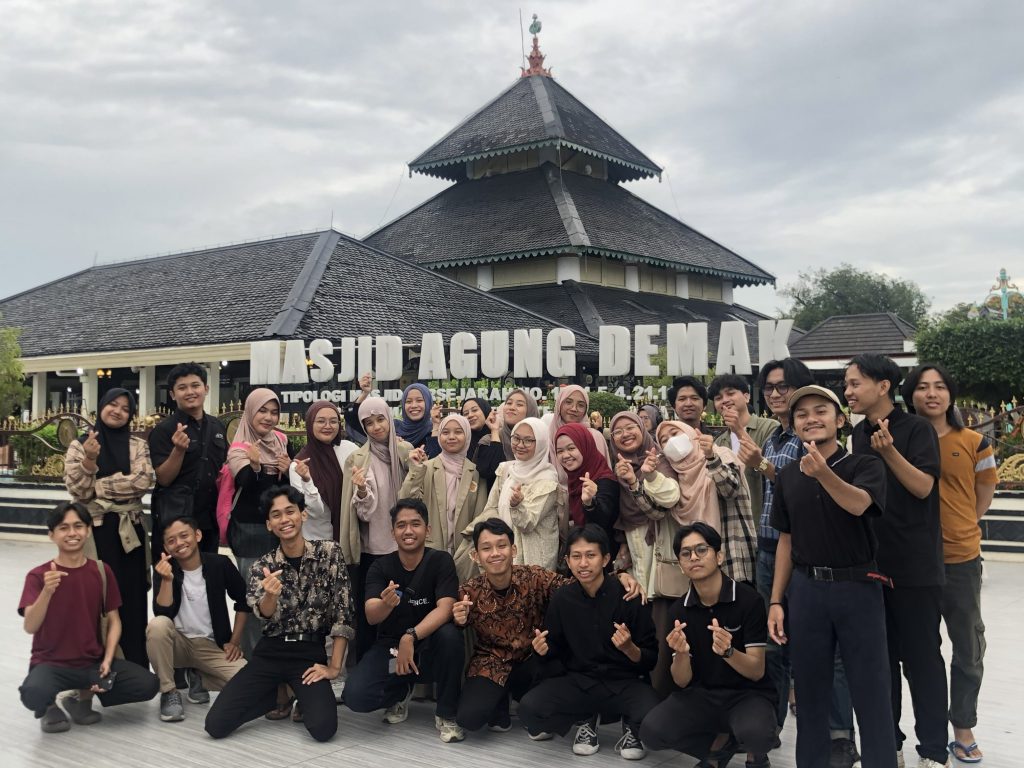
Central Java, 4 December 2025 — Students of the Arabic Study Program, class of 2023, Universitas Gadjah Mada carried out a field study in the cities of Kudus and Demak as part of the course Arabic Literature and Culture in Indonesia. The program was designed to provide empirical learning experiences on the dynamics of Indonesian culture and the historical connections between Arab–Islamic heritage and the development of local civilization.

Kudus and Demak were selected as the field study destinations due to their significant roles in the spread of Islam in Java. Through this field activity, students were expected to observe and analyze cultural heritage on-site and relate their findings to the theories studied in class.

The first destination visited was the Menara Kudus Mosque, also known as the Al-Aqsha Mosque, located in Kauman Village, Kudus, Central Java. Students examined firsthand how the mosque’s architecture, particularly its red-brick tower resembling a Majapahit-style temple, stands as strong evidence of acculturation between Islam and Hindu–Javanese culture. At the Menara Kudus Mosque, students observed Sunan Kudus’ cultural approach to da’wah, from preserving local traditions to utilizing Javanese arts and architectural forms that enabled Islam to be accepted peacefully by the local community. Traditions such as the prohibition of slaughtering cows, as well as Javanese songs and performing arts developed by Sunan Kudus, became part of the learning experience.

The field study continued at the Mubarok Jenang Museum, the first jenang museum in Indonesia, which highlights the history of Kudus’ jenang industry since 1930. Here, UGM Arabic Study Program students learned local wisdoms, particularly the values of Gusjigang (being morally good, mastering religious knowledge, and being skilled in trade) which shaped Kudus’ economic culture and intertwined with the Islamic teachings of Sunan Kudus. The museum offered a distinct experience, enabling students to observe how tradition, family-run industry, and regional identity are presented as public education and developed into creative economic potential.

The students then deepened their understanding of early Islamic da’wah in Java through a visit to the Great Mosque of Demak, a historical Wali Songo site and a central landmark of the Demak Sultanate. They examined the mosque’s traditional Javanese architectural form featuring a three-tiered pyramidal roof and the iconic saka guru pillars, including the legendary saka tatal. This visit provided richer insight into a model of da’wah rooted in local culture, dialogue, and gentle persuasion, reflected in the mosque’s architecture, traditions, and the social life of the surrounding community.

Through this series of field visits, students gained firsthand experience that history is not merely textual, but a living narrative present in buildings, traditions, and societal practices. The field study underscored the importance of understanding acculturation as a key element in the development of Islam in the archipelago which is visible in mosque architecture, local economies, and enduring cultural values.

This field study is expected to broaden the perspectives of Arabic Literature students and strengthen their analytical abilities in interpreting Indonesian cultural phenomena in a more comprehensive and applied manner.


Author: Jihan Pertiwi


#ArabicStudyProgram

#FacultyofCulturalSciences

#UGM

#FieldStudy

#SDGs4:QualityEducation

#SDGs8:DecentWorkandEconomicGrowth
#SDGs11:SustainableCitiesandCommunities
UGM Arabic Study Program Students Refresh Their Minds Before Final Exams Through an Outing Class Titled “Lu’bah Arabiyyah”

UGM Arabic Study Program Students Refresh Their Minds Before Final Exams Through an Outing Class Titled "Lu’bah Arabiyyah"

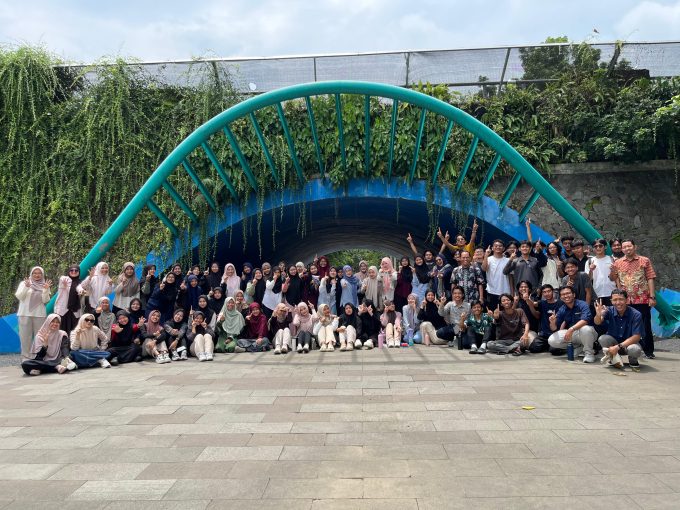
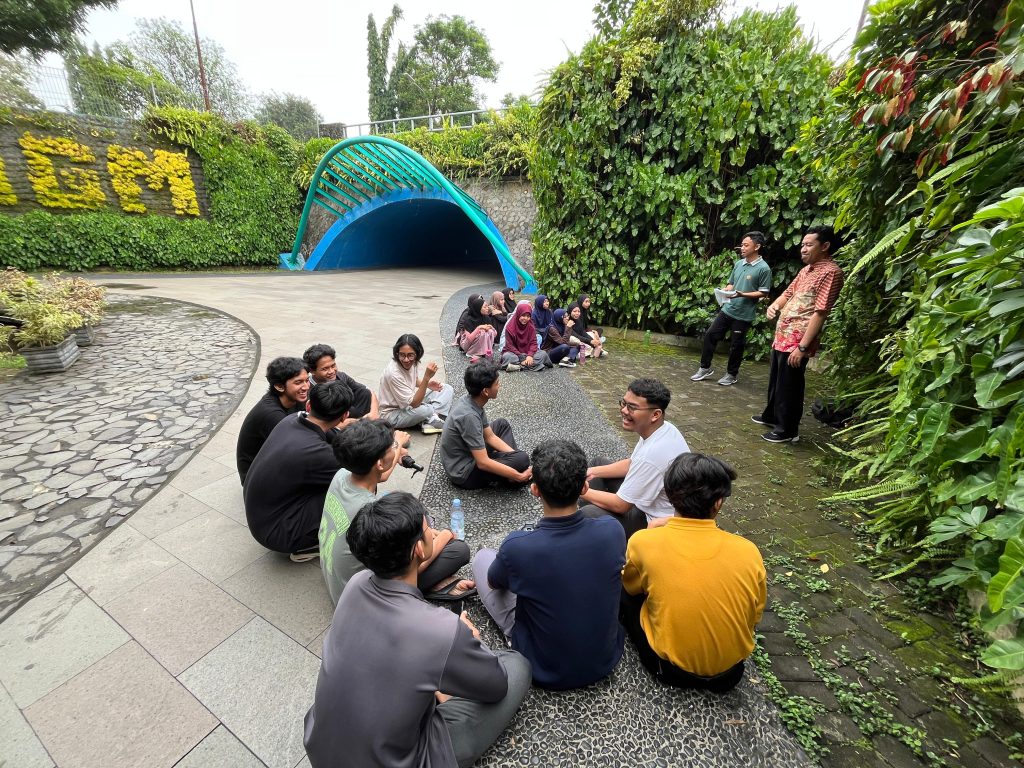
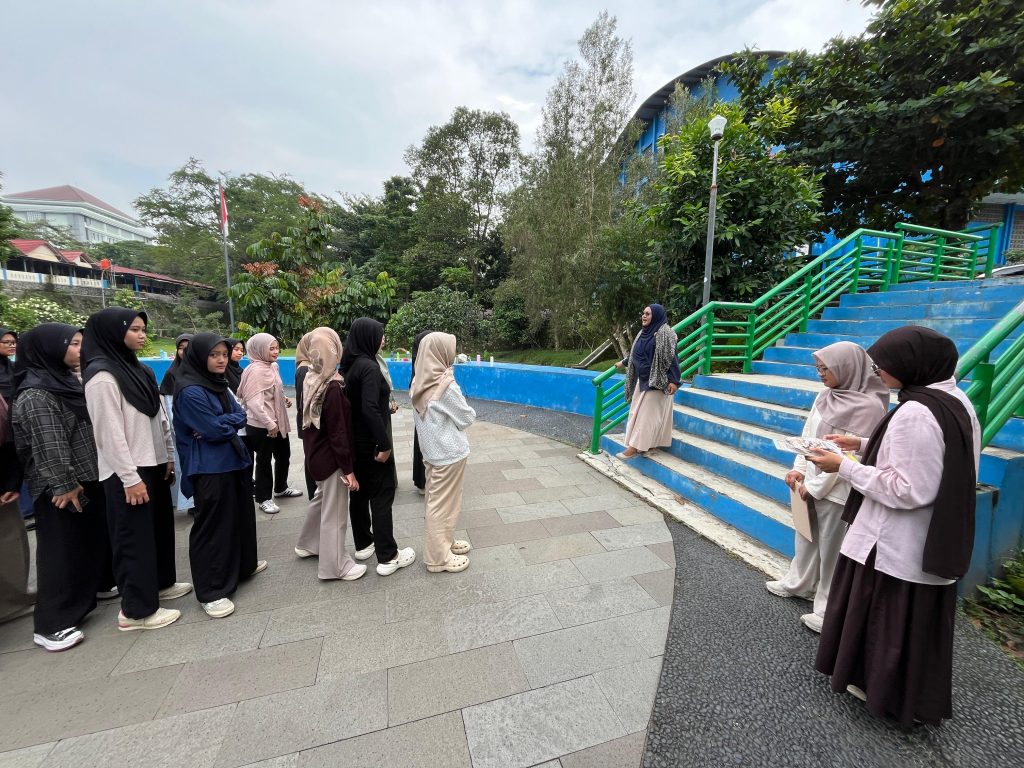
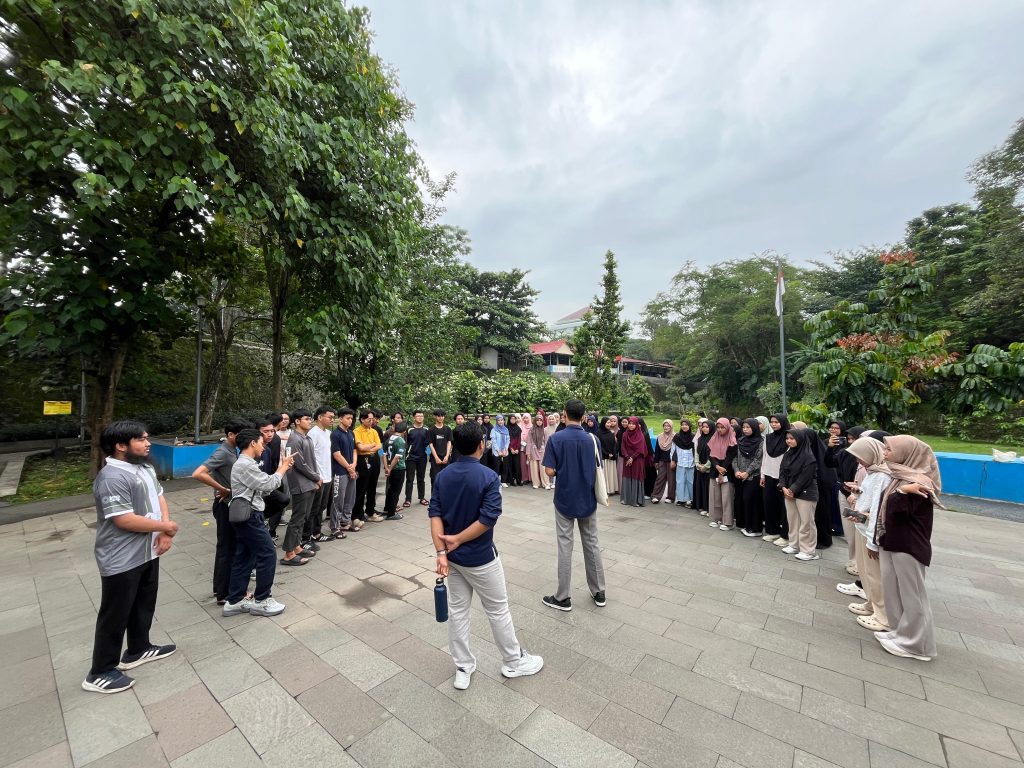
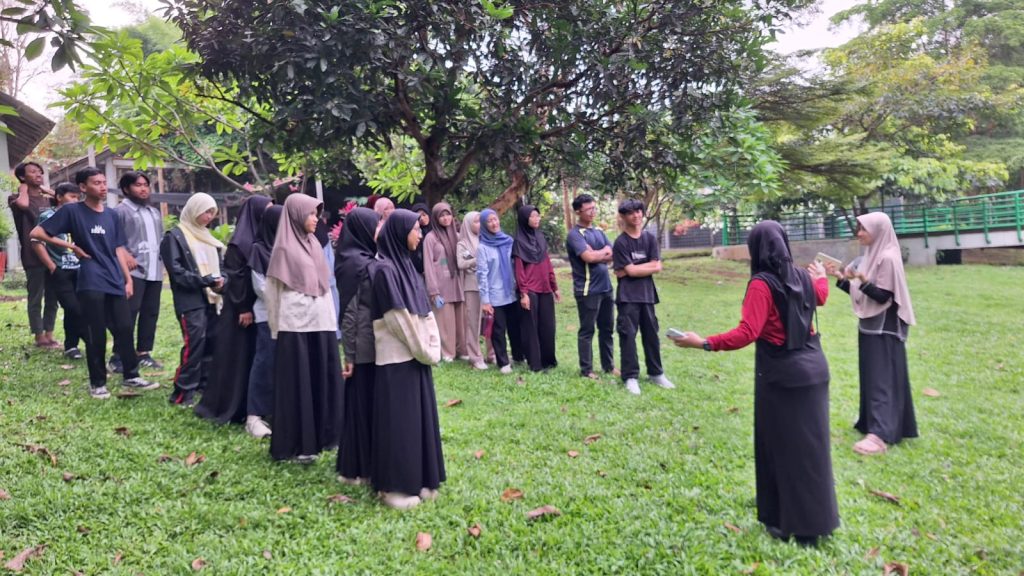
Yogyakarta, December 3, 2025 — A total of 68 first-year students from the Arabic Study Program at Universitas Gadjah Mada (UGM) attend an outing class at Wisdom Park UGM on Wednesday, 3 December 2025. The activity, titled Lu’bah Arabiyyah, served as a collaborative program for Arabic Writing, Arabic Speaking, and Tasrif courses to help students review lesson material through interactive games while refreshing their minds ahead of final exams. The event was accompanied by lecturers from the Arabic Study Program and supported by student tutors from the 2022 and 2023 cohorts.

During Lu’bah Arabiyyah, students are invited to do a series of game stations set up across Wisdom Park. Each game required them to actively use and recall their Arabic skills in preparation for the final exams. Among the activities were Sentence Relay, Puzzle Tasrif, and Arabic crossword puzzles. After completing all stations, the outing concluded with a communal meal and a shared rujak session with lecturers.

The 2025 cohort participated enthusiastically from start to finish. Many students expressed that Lu’bah Arabiyyah boosted their confidence and motivation ahead of the Final Examinations, as the activities helped them recall and reinforce material learned throughout the semester. Beyond academic preparation, the event also strengthened collaborations and intimacy among students, tutors, and lecturers, which is an important foundation for smoother communication and collaboration in future learning processes.


Author: Muhammad Ardiansyah


#ArabicStudyProgram

#FIBUGM

#Lu’bahArabiyyah

#SDGs3:GoodHealthandWellBeing

#SDGs4:QualityEducation

#SDGs16:Peace,Justice,andStrongInstitutions

Master in Middle Eastern Cultural Studies and Arabic Study Program UGM Held International Public Lecture with Prof. Ayman Shihadeh: “Exploring Skepticism and Tolerance in Premodern Islamic Thought”

Master in Middle Eastern Cultural Studies and Arabic Study Program UGM Held International Public Lecture with Prof. Ayman Shihadeh: “Exploring Skepticism and Tolerance in Premodern Islamic Thought”

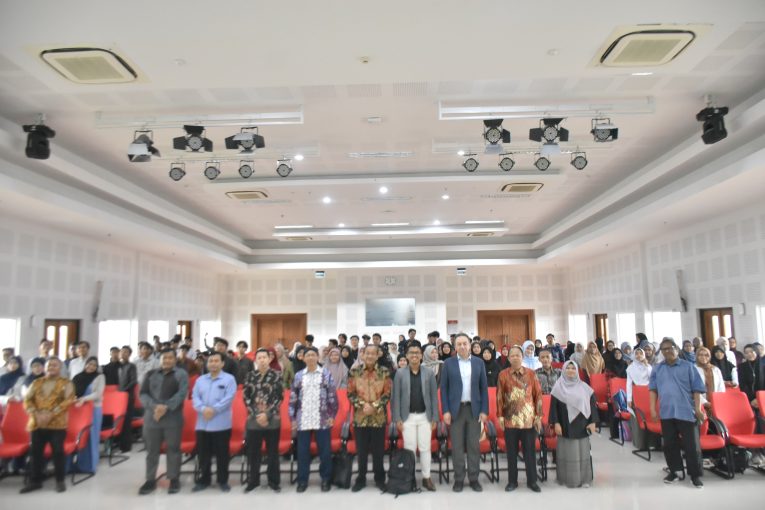
Yogyakarta, 13 November 2025 — The Master’s Program in Middle Eastern Cultural Studies (KBTT) at Universitas Gadjah Mada, in collaboration with the Arabic Study Program, hosted an International Public Lecture titled “Scepticism and Tolerance: A Case from Premodern Islamic Thought.” The event featured Prof. Ayman Shihadeh, a distinguished scholar of Islamic intellectual history from the School of Oriental and African Studies (SOAS), University of London. Held at the Soegondo Auditorium, Faculty of Cultural Sciences UGM, the lecture was also livestreamed via the Arabic Study Program’s YouTube channel, allowing broader public access. The session was moderated by Tohir Mustofa, M.A., lecturer of the Arabic Study Program, and attended by students from both undergraduate and postgraduate levels.

This public lecture highlighted the strategic synergy between the KBTT Program and the Arabic Study Program UGM, reaffirming their shared commitment to bringing world-class academic discourse to students and the wider community. Through its YouTube livestream, the event aimed to reach a wider audience, strengthen public intellectual literacy, and foster a culture of critical and constructive dialogue.

The lecture also supported key Sustainable Development Goals (SDGs), particularly SDG 4 (Quality Education) through accessible high-quality academic learning, SDG 16 (Peace, Justice, and Strong Institutions) by promoting values of tolerance and dialogue, and SDG 17 (Partnerships for the Goals) through interdisciplinary academic collaboration.


Author: Muhammad Ardiansyah


#KuliahUmum

#SastraArabUGM

#MagisterKBTTUGM

#SDGs4:QualityEducation

#SDGs16:Peace,Justice,andStrongInstitutions

#SDGs17:PartnershipsfortheGoals

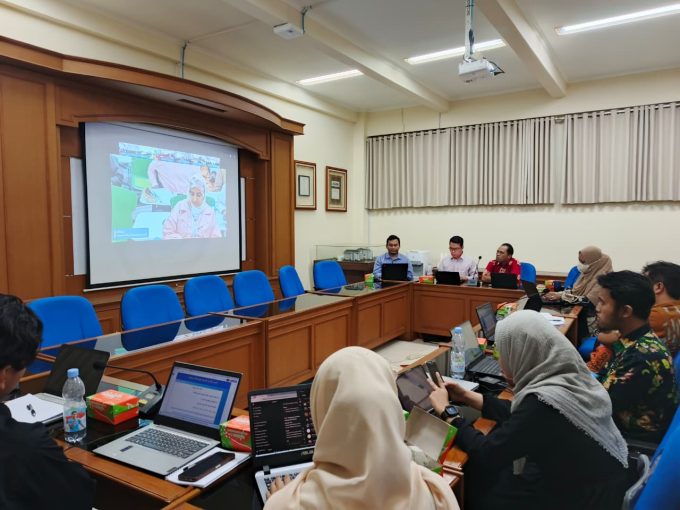
UGM Arabic Study Program Participates in ICESCO Arabic Language Teaching Training

UGM Arabic Study Program Participates in ICESCO Arabic Language Teaching Training

Yogyakarta, 13 November 2025 — The Arabic Study Program at Universitas Gadjah Mada (UGM), with Universitas Islam Negeri Sunan Kalijaga, Universitas Ahmad Dahlan, and Pondok Pesantren Muhammadiyyah, took part in the Arabic Language Teaching Training organized by the Islamic World Educational, Scientific and Cultural Organization (ICESCO). The training brought together not only participants from Indonesia but also representatives from various countries such as Malaysia, Thailand, Uzbekistan, Morocco, Russia, and others.

The ICESCO training focused on four fundamental theories in Arabic language teaching and learning. The first was the Grammar–Translation Theory, which is suitable for advanced learners and emphasizes reading, writing, and vocabulary mastery, particularly for academic, religious, and literary purposes. The second was the Behaviorism Theory (as-Sulukiyah), which views language as a form of behavior shaped through repetition and imitation, highlighting the significant role of environment in language acquisition. The third theory, Cognitivism (al-Ma‘rifiyyah), underscores that language learning involves active mental processes such as attention, information processing, and comprehension, placing learners as active participants rather than passive recipients. The final theory, Communicative Theory (at-Tawasuliyyah), emphasizes real-life language use within social contexts, prioritizing fluency and communicative ability over strict grammatical accuracy. This theory also acknowledges dialectal variations as an integral part of everyday language use.

In its concluding remarks, ICESCO highlighted that no single theory is entirely sufficient. Each has strengths and limitations, meaning effective Arabic language instruction requires an integrated approach that adapts to context. The training also emphasized the growing role of technology and artificial intelligence (AI) in designing lessons, generating exercises, and visualizing theoretical applications in more engaging and effective ways.

The Arabic Study Program at UGM’s participation in the ICESCO training reinforces the university’s commitment to strengthening the capacity of Arabic language educators and learners on campus. This initiative aligns with the Sustainable Development Goals (SDGs), particularly SDG 4 (Quality Education), SDG 16 (Peace, Justice, and Strong Institutions), and SDG 17 (Partnerships for the Goals). Through this involvement, the Arabic Study Program at UGM continues to advance as a progressive and globally connected center for Arabic language and cultural studies.


Author: Muhammad Ardiansyah


#UGMArabicStudyProgram

#FacultyofCulturalSciences

#UniversitasGadjahMada

#ICESCO

#SDGs4:QualityEducation

#SDGs16:Peace,Justice,andStrongInstitutions

#SDGs17:PartnershipsfortheGoals