Arsip:

Berita (inggris)

Encouraging Entrepreneurship Development, Arabic Literature Students at UGM Learn Promotional Strategies through TikTok and Instagram

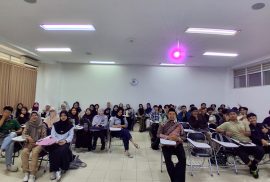
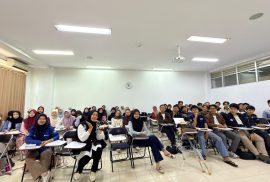
YOGYAKARTA – In the digital era, digital marketing has become an accessible means for business owners to promote their products and reach a wider audience. Digital promotional trends are increasingly common and have become part of everyday life. This was conveyed by Reisa Nurma Borurega, S.S., during the Entrepreneurship and Self-Development course on Monday, November 2, 2026, under the theme “Developing Entrepreneurship through Digital Promotion.”

The use of social media platforms, such as TikTok and Instagram, was one of the topics discussed during the lecture. Reisa explained that the extensive reach of both platforms provides business owners with opportunities to promote their products. She also mentioned that TikTok has approximately 120 million users in Indonesia. In this regard, Reisa encouraged Arabic Literature students to gain at least 1,000 followers on either TikTok or Instagram, as this could open up opportunities to become affiliates, conduct live streaming sessions on TikTok, and utilize the yellow basket feature.

In addition to discussing the use of social media platforms, Reisa also shared tips on creating content with the potential to appear on the For You Page (FYP) to promote products. One important element to consider is the hook, which refers to the part of the content designed to capture the audience’s attention. She explained that a hook can take various forms, including video footage, text or fonts, sounds, and voice-overs.

During the discussion session, ten common challenges faced by students when creating content were identified. Two of these were related to finding content ideas and maintaining consistency. In response, Reisa explained that content creation could start with simple things that students do in their daily lives, such as an “a day in my life” video. “The key is to just be confident first,” she emphasized. She also highlighted the importance of commitment and having the courage to get started without being afraid of other people’s judgments in order to build consistency in content creation.

At the end of the session, Reisa once again encouraged students to start creating content right away. According to her, content monetization in the digital era can serve as an additional source of income. Furthermore, this activity has the potential to develop into a full-time career once content creators gain wider recognition and receive various endorsement offers.

Author : Hashifa Zara Ahfiyani

#SDGs 4 Quality Education
#SDGs 8 Decent Work and Economic Growth
#SDGs 9 Industry, Innovation, and Infrastructure

Equipping Students to Become Independent Entrepreneurs, Diyah Wikan Discusses Business Funding Options

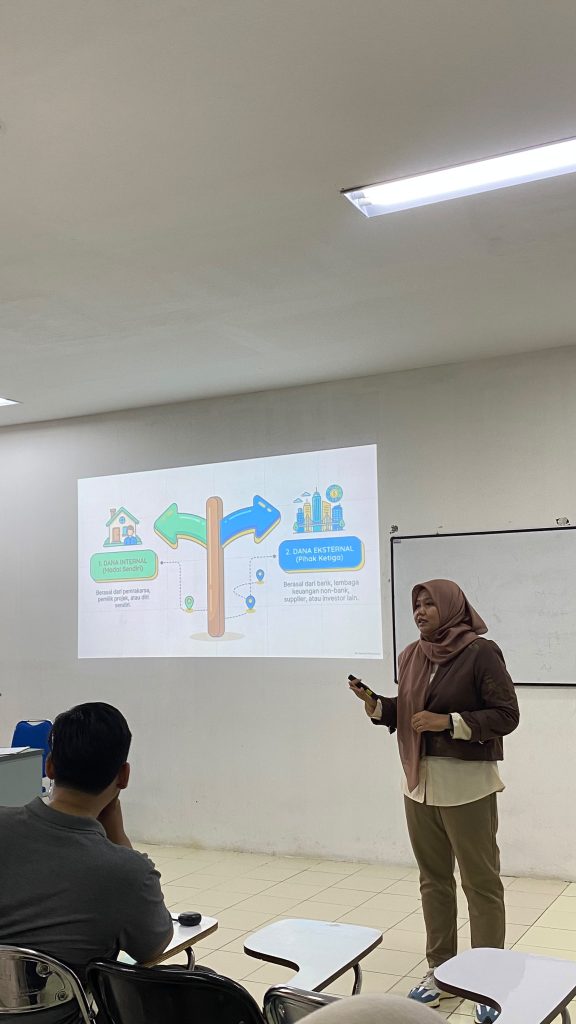
YOGYAKARTA – When building a business, funding is one of the key aspects that every entrepreneur needs to consider. Capital is not only essential for starting a business but also for developing and expanding its scale. This topic became the main focus of an Entrepreneurship course featuring Diyah Wikan, S.S., M.A., as the guest speaker. She delivered a lecture titled “Business Funding” on October 28, 2026.

Diyah explained that business funding is generally divided into two types: internal and external funding. Internal funding refers to sources of capital obtained from personal funds or close connections, such as personal savings, reinvested business profits, and financial assistance from family or friends. One strategy she emphasized was setting aside at least 25% of business profits to be reinvested in business development. In addition, entrepreneurs need to separate their personal and business finances to ensure that capital is managed more systematically and transparently.

Furthermore, Diyah discussed external funding, which comes from outside sources such as banks, investors, crowdfunding platforms, Islamic financial institutions, government programs, and grants. Regarding banking, she explained the differences between conventional and Islamic banking systems. In Islamic banking, several contracts (akad) can be applied according to business needs. Musyarakah is a partnership between a bank and a customer in which both parties contribute capital and share profits according to an agreed arrangement. Meanwhile, mudharabah is a partnership in which the bank provides all the capital, while the customer acts as the business manager. Other financing contracts include ijarah, which involves leasing transactions, such as renting business premises, and murabahah, which is used to finance the purchase of goods, such as vehicles or machinery needed for business operations.

Beyond banking institutions, business funding can also be obtained through angel investors and crowdfunding. An angel investor is an individual who uses personal funds to support businesses considered to have growth potential. Meanwhile, crowdfunding allows entrepreneurs to raise funds from the public through specific platforms. One example is donation-based crowdfunding through Kitabisa.com. These various funding alternatives provide entrepreneurs with opportunities to obtain capital according to their business needs and characteristics.

Through this lecture, Diyah encouraged students to understand that funding is one of the essential foundations for building and developing a business. A business should fundamentally aim to generate profit in order to survive and grow. However, business success is not determined solely by its financial performance but also by an entrepreneur’s ability to manage resources and establish business development strategies. Therefore, understanding various funding sources and managing capital wisely are essential foundations for students as they prepare to become independent entrepreneurs capable of creating employment opportunities.

Author : Putri Azkia N.L.

#SDGs 4 Quality Education
#SDGs 8 Decent Work and Economic Growth
#SDGs 9 Industry, Innovation, and Infrastructure
Arabic Literature Students Explore Business Financial Management, from Revenue to Financial Statements 

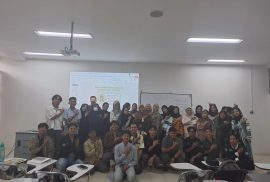
YOGYAKARTA – In the business world, entrepreneurs are expected not only to develop their leadership and business management skills but also to understand financial management. A business’s financial health depends on its cash flow and how its finances are managed. This was in line with the topic discussed during a lecture on Monday, October 19, 2026, entitled “Financial Management in Entrepreneurship.” The session featured Diyah Wikan Rakhmatika, S.S., M.A., a 2009 graduate of Arabic Literature at Universitas Gadjah Mada (UGM), a lecturer in Islamic Economics at Universitas Darussalam Ciamis, and the Finance and Accounting Manager at JATRA Design Studio.

During the session, Diyah explained three key topics: the difference between revenue and net profit, types of expenses, and types of financial statements. In discussing revenue, Diyah emphasized, “Margin is not profit.” She explained that many people often assume that high revenue automatically means a high profit margin. In fact, revenue refers to the total income generated from sales, while profit is calculated after deducting the cost of goods sold (COGS) and operating expenses, which include fixed costs and variable costs. Therefore, high revenue does not necessarily translate into high profits, as businesses also incur operating expenses beyond the cost of producing their goods.

Diyah also highlighted four key aspects that entrepreneurs need to pay attention to: separating personal and business finances, strengthening branding and building trust, avoiding consumer debt, and understanding the difference between revenue and profit.

Furthermore, Diyah emphasized the importance of understanding the three types of financial statements used in business. For beginners, she recommended learning about cash flow statements and income statements first before moving on to the more complex balance sheet. At the end of the session, she reiterated the importance of understanding these two statements to assess a business’s financial health. Ultimately, business management skills need to be complemented by sound financial management skills.

Author : Hashifa Zara Ahfiyani

#SDGs 4 Quality Education

#SDGs 8 Decent Work and Economic Growth


Arabic Literature Students Present Social Solutions Through Sociopreneurship Project 

YOGYAKARTA – The Entrepreneurship course held on Monday, October 12, 2026, became a platform for Arabic Literature students to showcase their creativity through sociopreneurship project presentations. During the event, students presented socially oriented business ideas and strategies that focused not only on financial profit but also on creating meaningful benefits for society. Through group presentations, each team explained the background of their ideas, the social issues they sought to address, and their strategies for developing sustainable businesses. Various innovative ideas were introduced to address community issues by combining business principles with social empowerment.

The concept of sociopreneurship emphasizes the importance of creating sustainable positive impacts. The success of a project is measured not merely by its financial potential but also by how effectively it addresses community needs and empowers people. In addition to serving as a platform for presenting ideas, the presentation session also provided an opportunity for discussion and the exchange of perspectives among groups. Students developed their communication and teamwork skills while learning to analyze challenges and opportunities in designing social business models. The event concluded with an award presentation to the best team in recognition of their creativity in developing their project. This recognition is expected to motivate students to continue generating ideas that create positive social impacts.

Through this learning experience, the Entrepreneurship course encourages students to look beyond profit and become more aware of social and environmental issues in their surroundings. Ideas developed in the classroom are expected to continue growing into concrete solutions that bring widespread benefits to society.

Author : Putri Azkia N.L.

#SDGs 4 Quality Education

#SDGs 8 Decent Work and Economic Growth

#SDGs 10 Reduced Inequalities

#SDGs 17 Partnerships for the Goals